
Anchors and fixings
From light-wall plugs to concrete anchors: identify the family, compare documented dimensions and prepare a technical enquiry with the correct references.
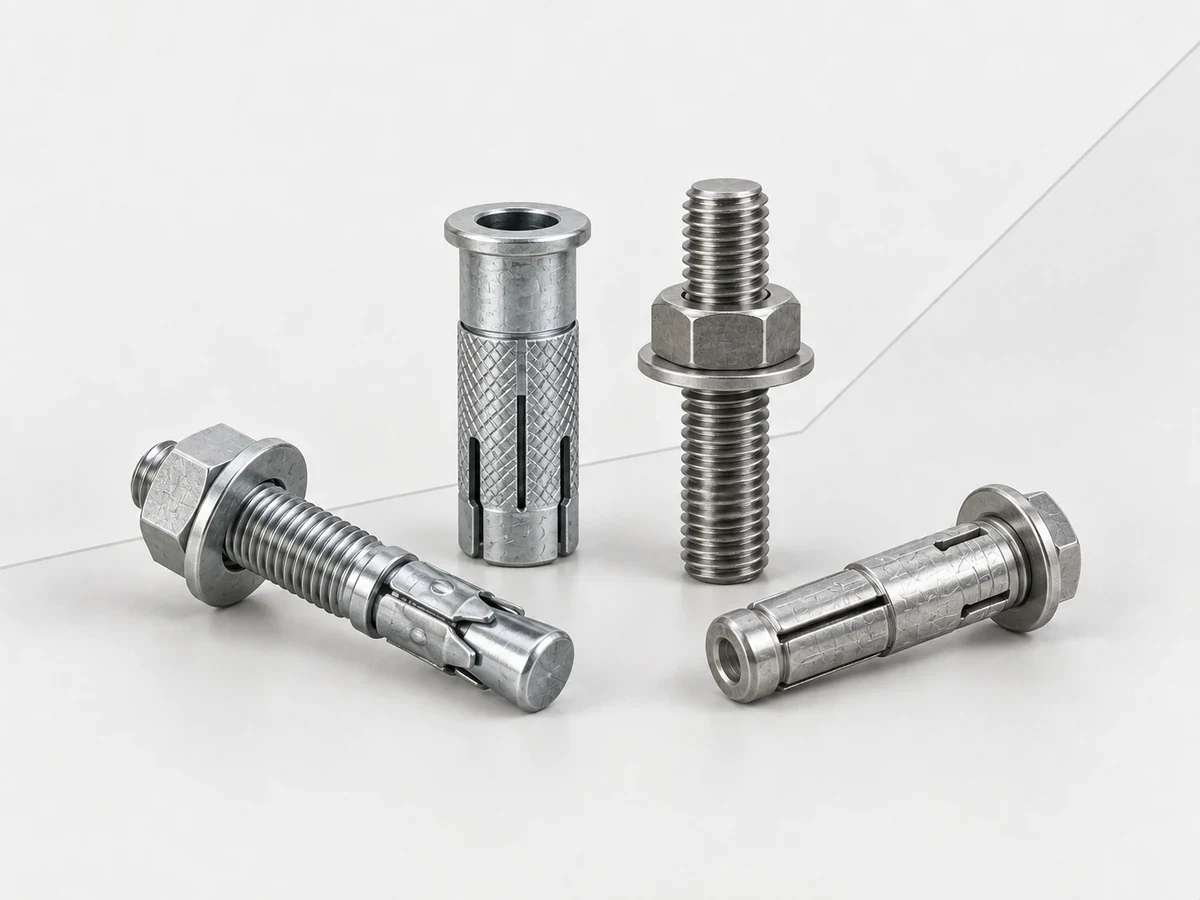
Explore by family
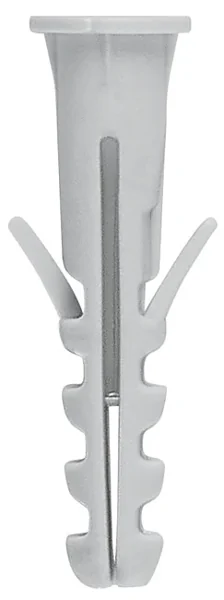
Nylon and plastic plugs
The polymer body expands against the hole wall as the specified screw is inserted. Rib geometry, screw diameter and anchorage length determine how the system works.
Explore →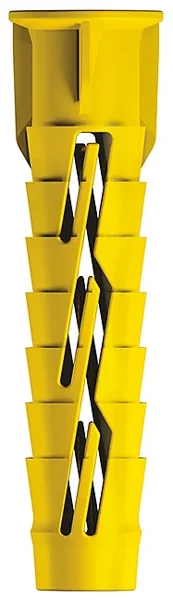
Universal plugs
Plug deformation depends on the substrate: expansion in solid material or knotting and bearing in cavities where the design allows it. The universal designation does not remove application limits.
Explore →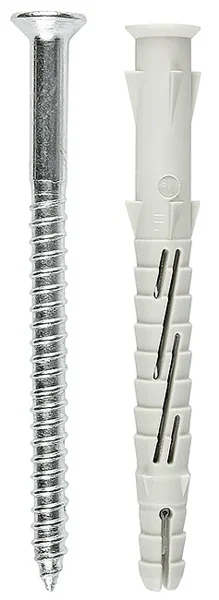
Frame and facade fixings
Frame fixings allow installation through the fixture. The expansion zone must reach the load-bearing substrate beyond the bracket, plaster and non-load-bearing layers.
Explore →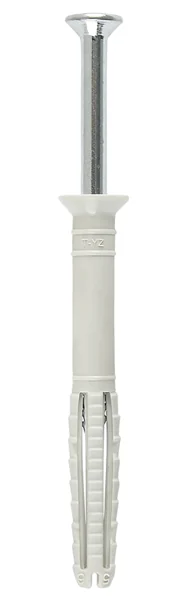
Hammer-in fixings
A hammer-driven nail or screw expands the body during installation. Collar, countersunk and cylindrical-head versions suit different fixture geometries.
Explore →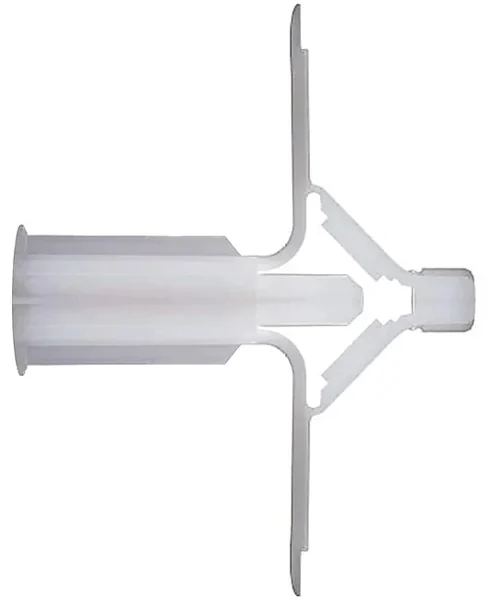
Hollow-wall anchors
The fixing forms a bearing surface behind a board or within a cavity. Its grip range must include the actual wall thickness and allow the required deformation space.
Explore →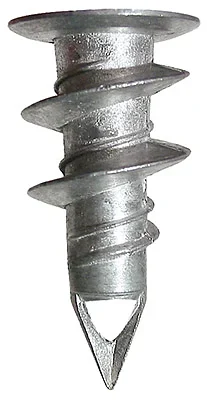
Self-drilling plasterboard fixings
Self-drilling designs screw into the board and receive a dedicated screw. Anchor material and thread geometry must suit the board type and thickness.
Explore →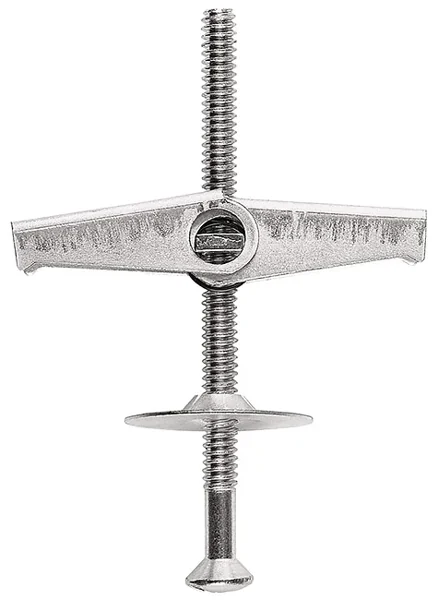
Toggle and spring anchors
A toggle or spring element passes through the hole and opens behind the wall. Bearing area and clear cavity depth are essential parameters.
Explore →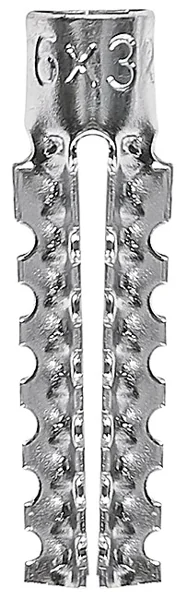
Aerated concrete fixings
Aerated concrete requires geometries suited to its porous structure. Expansion, screwing or cutting into the substrate are design-specific functions.
Explore →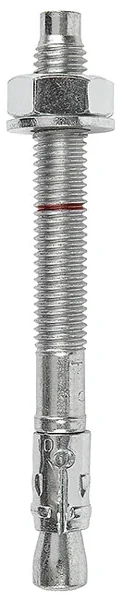
Through-bolt expansion anchors
Tightening the nut draws the cone into the expansion clip inside the hole. Through-bolts normally allow installation through the fixture using the prescribed sequence.
Explore →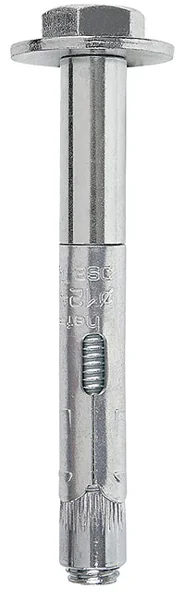
Sleeve anchors
An expanding sleeve transfers actions to the substrate. Bolt, nut, hook and eye versions can differ in expansion zone and installation sequence.
Explore →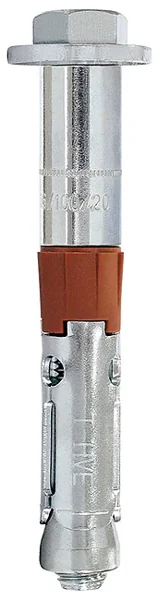
Heavy-duty and undercut anchors
Heavy-duty and undercut families use specific load-transfer mechanisms. The commercial designation does not assign a common load capacity to the family.
Explore →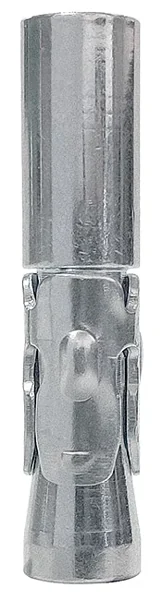
Internally threaded and drop-in anchors
An internal thread receives a compatible bolt or rod. Drop-in designs may require a dedicated setting operation before the threaded element is inserted.
Explore →
Concrete and masonry screws
The anchor thread engages the substrate after the specified drilling operation. Nominal screw diameter, drill diameter and anchorage depth are separate quantities.
Explore →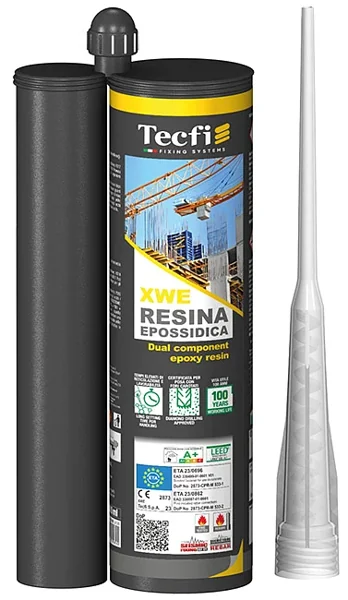
Bonded anchors
Resin transfers actions between a metal element and the hole wall. The system comprises the resin, rod or sleeve, substrate and installation procedure described in its technical assessment.
Explore →
Sleeves and components for bonded anchors
Mesh sleeves and metal components must be matched to the specified bonded-anchor system. In perforated substrates, a sleeve may contain the resin and control anchorage formation.
Explore →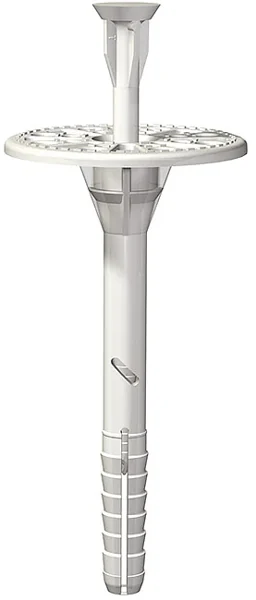
Insulation and ETICS anchors
ETICS anchors pass through the insulation into the load-bearing substrate. Plate, expansion element and installation method form part of the system configuration.
Explore →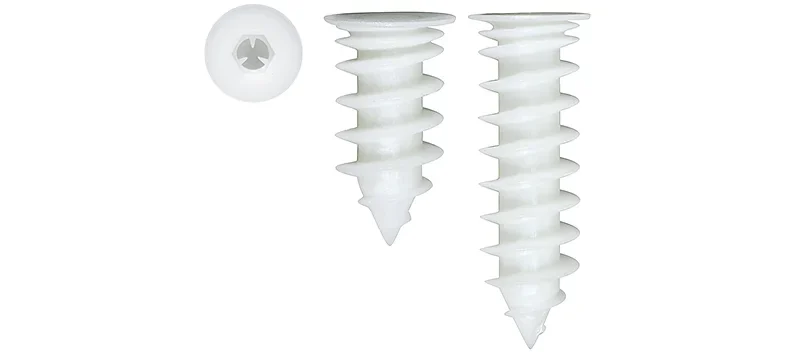
Fixings into insulation boards
These fixings engage the insulation board for applications permitted by the individual design. They differ from ETICS anchors that reach the masonry or concrete.
Explore →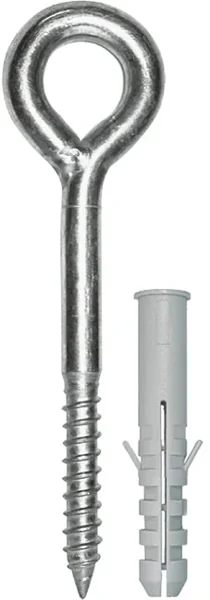
Scaffold and netting anchors
Scaffold anchorage connects the designed scaffold elements to the substrate. Plug, eye and scaffold connection must be assessed in their actual combination.
Explore →Anchor finder
Search by part number or select declared characteristics. Missing data do not satisfy a dimensional filter.
Request technical review or a quotation
Select a finder reference or describe the application.
FAQ
How do I select an anchor?
Start with substrate, load and environment, then identify configuration, depth, distances and part-specific documentation. The finder selects catalogue references and does not perform a design check.
Does equal diameter mean equal capacity?
No. Geometry, material, anchorage and technical assessment may differ. Dimensional comparison does not establish technical equivalence or interchangeability.
Do all anchors have an ETA and CE marking?
These cannot be assigned to an entire category. Check the product documentation, scope and applicability to the specific size. An ETA link does not extend its assessment to other parts.
What information is needed for an enquiry?
Part number or family, quantity, substrate material and condition, thicknesses, fixing geometry, environment, actions and required documents. For resins, also specify temperature and hole conditions.
Sources and documentation
Dimensions transcribed from the listed sources, checked on 13 November 2026. “—” means not stated or not normalised, not zero. Nominal diameter, thread and drill diameter are distinct. Consult the specific variant documentation for loads, installation and permitted applications. Availability is confirmed at quotation.
Dueemme Sidol S.r.l. · Sesto San Giovanni, Milan · Supply for industrial customers and OEMs.