
ISO 4033:2023
ISO 4033 identifies style-2 high nuts with coarse pitch. The standard covers more sizes than the commercial selection configured here. UNI 5587 has a separate data sheet: widths across flats and heights do not match at every size.
A high nut for joints requiring greater thread engagement height than a regular nut. Select the standard, property class and envelope: height alone does not determine joint strength or make the nut self-locking.
UNI 5587
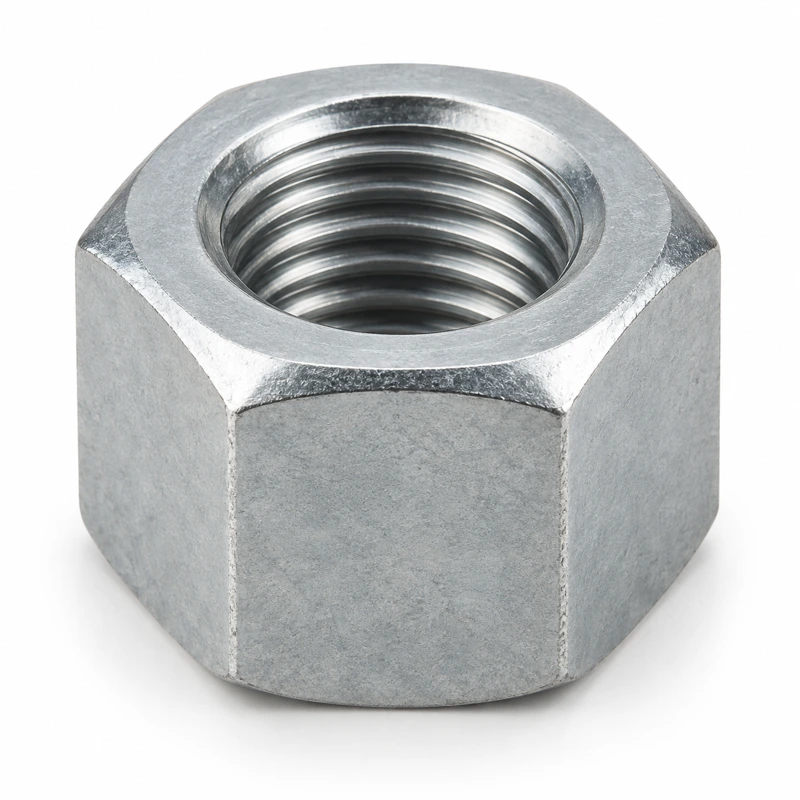
Verified commercial selection: M6, M8, M10, M12, M16, M20, M24, M30 and M36. The table gives maximum width across flats and height for the selected series; other sizes, classes and finishes on request.
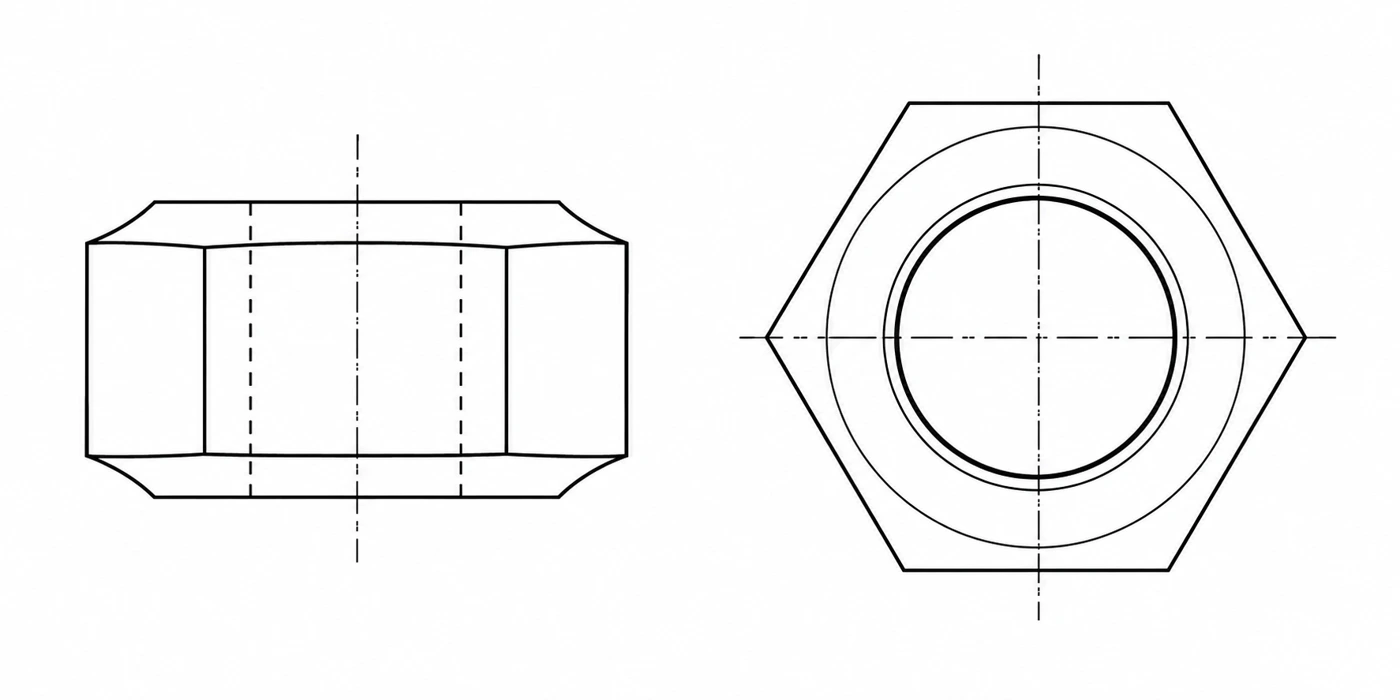
Dimensions in mm. Identification drawing, not a manufacturing drawing.
| M | Pitch P | s | m max. |
|---|---|---|---|
| 6 | 1 | 10 | 5.7 |
| 8 | 1.25 | 13 | 7.5 |
| 10 | 1.5 | 16 | 9.3 |
| 12 | 1.75 | 18 | 12 |
| 16 | 2 | 24 | 16.4 |
| 20 | 2.5 | 30 | 20.3 |
| 24 | 3 | 36 | 23.9 |
| 30 | 3.5 | 46 | 28.6 |
| 36 | 4 | 55 | 34.7 |
Commercial selection dimensions do not replace the complete supply specification. Check bolt projection beyond the nut, effective thread engagement and tool clearance.
| Material | Class / hardness | Configurable range | Supply |
|---|---|---|---|
| Steel to mechanical specification | 12 | M6–M36 | On request |
For requirements beyond the tabulated combinations, enquire about aluminium, brass, nylon, duplex, superduplex or an ASTM specification. Alloy or grade, dimensions, mechanical requirements and finish are defined for the enquiry; the geometric reference does not automatically imply conformity with the product standard.
| Finish | Material | Class / hardness | M |
|---|---|---|---|
| Plain / as manufactured | Steel to mechanical specification | 12 | M6–M36 |
Select the finish for the material/property-class combination. Hydrogen relief and lubrication are separate process requirements, not certificates and not implied by the coating name.
ISO 4033 identifies style-2 high nuts with coarse pitch. The standard covers more sizes than the commercial selection configured here. UNI 5587 has a separate data sheet: widths across flats and heights do not match at every size.
Related commercial series with its own geometry. Examples: M10 has 17 mm flats in the commercial UNI series and 16 mm in ISO; M16 is 16 mm high in UNI and up to 16.4 mm in the ISO selection. Compare before substitution.
| Document | Status |
|---|---|
| Declaration of conformity | Subject to order agreement |
| Material certificate | Subject to order agreement |
| EN 10204 2.2 test report | Subject to order agreement |
| EN 10204 3.1 inspection certificate | Subject to order agreement |
| Dimensional inspection report | Subject to order agreement |
| Coating report | Subject to order agreement |
| Other documentation | Subject to order agreement |
Batch documents are not automatically included: specify your requirements in the RFQ.
Match nominal diameter, pitch, strength, material, finish and joint conditions.
Class 12 is a nut property class, not bolt class 12.9. Match bolt and nut to mechanical requirements, diameter, pitch and joint conditions. Do not infer strength from the high profile alone.
Other diameters, lengths, materials and finishes can be assessed on request. For dedicated production, we agree geometry, requirements and minimum quantities with the customer.
Send your specification →Selections follow the technical combinations in this data sheet. Quantities, delivery terms and documents will be agreed in the quotation.