
Structural bolts are used in steel structures and engineered connections where performance, consistency and compliance are essential.
They are supplied as complete assemblies, ensuring compatibility between components and consistent behavior under load.
For this reason, EN 15048 and EN 14399 define structural bolting as a system rather than individual components.
Structural bolting systems are defined by standards that determine how assemblies behave under load and during installation.
In particular, EN 15048 and EN 14399 represent two different approaches to structural connections, each with specific requirements and applications.
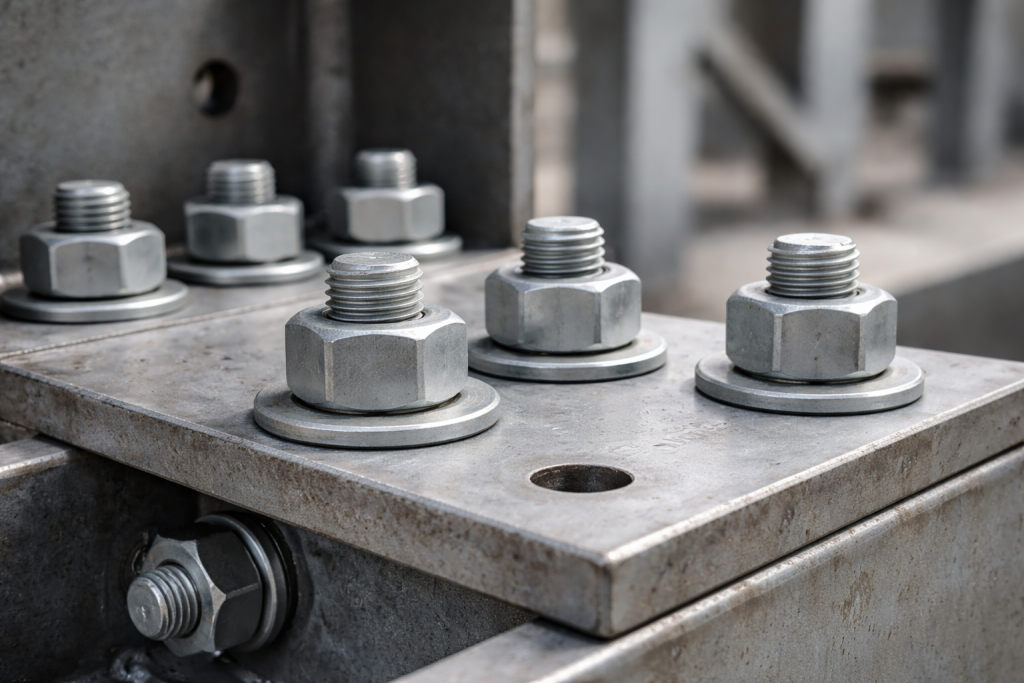
EN 15048 assemblies are used in non-preloaded structural connections, where controlled preload is not required.
They are suitable for standard structural applications and must be supplied as compliant assemblies with correct marking and documentation.
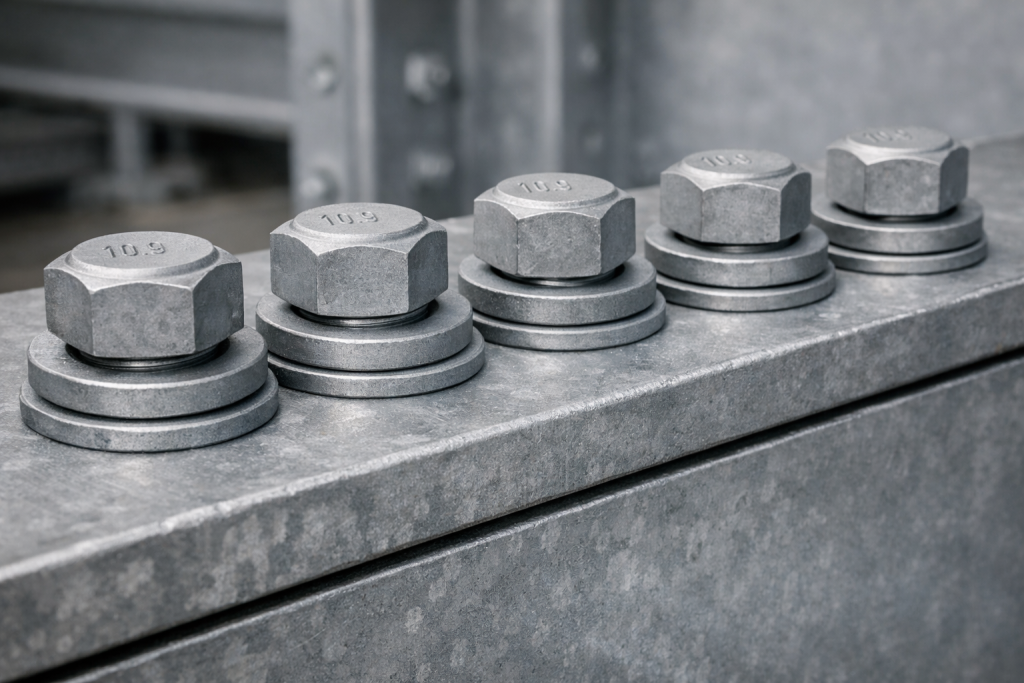
EN 14399 systems are designed for preloaded structural connections, where tightening method and assembly performance are critical.
For this reason, preload control and installation consistency directly affect the performance of the connection.

Structural bolting is not a single component, but a complete assembly.
Material and surface treatment affect mechanical performance, corrosion resistance and long-term durability.
In preloaded systems, surface condition also influences tightening behavior and preload consistency.
Material
Carbon steel is typically used for structural applications, with strength class 8.8 as a common choice.
Surface treatments
Surface protection may include electroplating according to ISO 4042 or hot-dip galvanizing, depending on environmental conditions.
Material
High-strength steel is used for these systems, typically in strength class 10.9, ensuring consistent mechanical performance.
Surface treatments
Surface conditions must be controlled and compatible with preloaded assemblies.
In addition, treatments such as hot-dip galvanizing may require specific considerations to maintain correct behavior during tightening.
Surface treatment in EN 14399 systems directly affects friction and preload, and must be consistent with the assembly and installation method.
Structural bolting standards define complete assemblies, not individual components.
Correct supply and usage are essential to ensure performance and compliance.
Compliance applies to the complete assembly, not to individual components.
| Feature | EN 15048 | EN 14399 |
|---|---|---|
| Type of connection | Non-preloaded | Preloaded |
| Structural behavior | Bearing (contact) | Friction (preloaded system) |
| Tightening control | Not critical | Critical |
| Sensitivity to friction | Low | High |
| Typical strength class | 8.8 | 10.9 |
| Supply | Preferably as assembly | Required as assembly |
| Component interchangeability | More flexible | Not allowed |
| Surface treatment influence | Limited | Critical for preload |
Structural bolts are used in steel connections where reliability, load performance and compliance are required.
They are applied across different sectors depending on structural requirements and installation conditions.
Primary structural connections in steel frameworks and load-bearing assemblies
Bridges, transport systems and large-scale structural projects
Heavy-duty steel assemblies and plant installations
Applications requiring controlled performance and specification compliance
Structural bolting is not only about supply, but about correct specification, consistency and control across the entire process.
We support customers in defining the correct standard, strength class, surface treatment and assembly composition.
Supply chain is managed to ensure consistency between components, documentation and requirements.
Support in providing certification, traceability and compliance documentation for structural applications.
Preventing mismatches, non-conformities and installation issues through controlled supply and technical validation.
Providing complete information helps us define the correct assembly and avoid delays or inconsistencies.