
Aesthetic Finishes for Fasteners
Types of Aesthetic Finishes
Aesthetic surface finishes are applied to fasteners to improve appearance and ensure visual consistency in visible applications.
These treatments are typically selected where design, color uniformity and surface quality are key requirements.
Black Oxide (Nerinox)
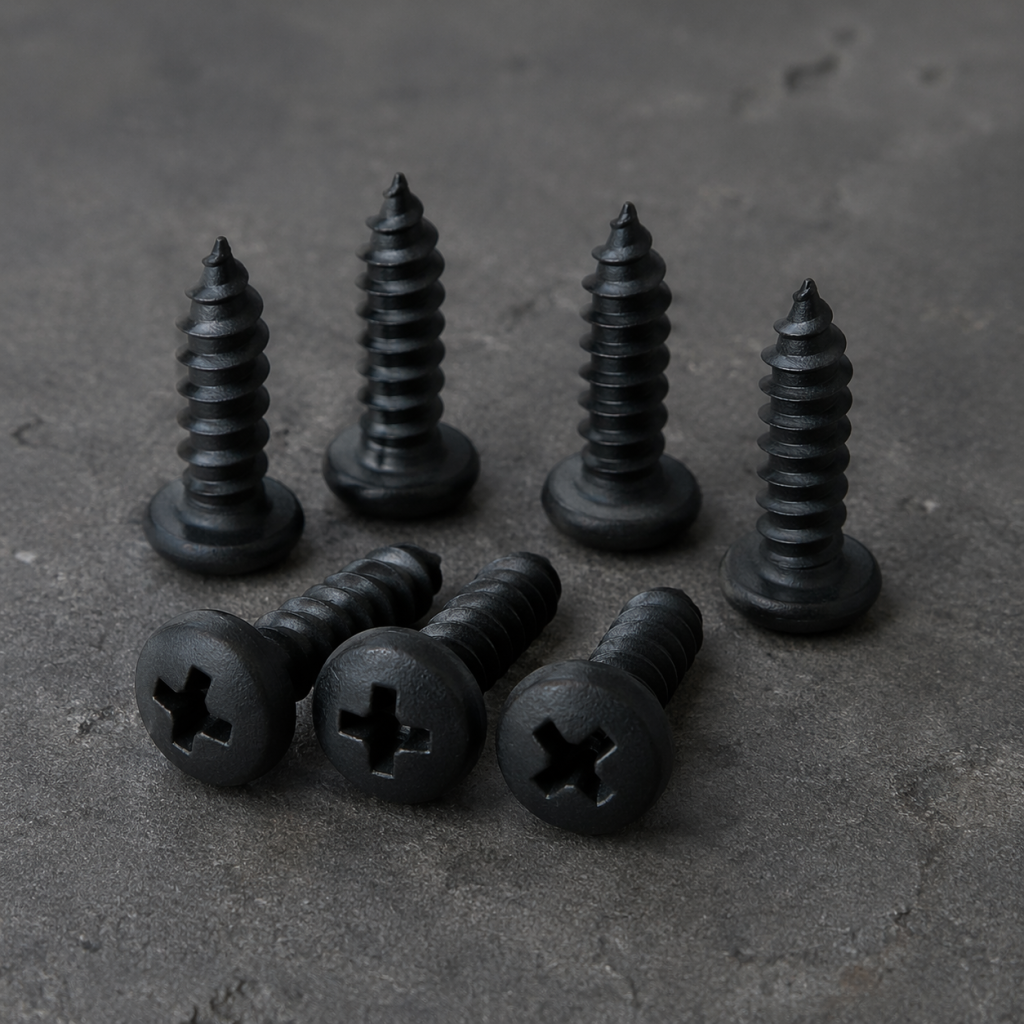
Black oxide is a chemical conversion treatment applied directly to the steel surface, creating a uniform black finish without adding thickness.
Key characteristics:
Deep black matte appearance
No dimensional variation
Very low corrosion resistance
Maintains precision on threads and tolerances
Brass Plating

Brass plating provides a warm golden finish, commonly used in decorative or design-focused applications.
Key characteristics:
Golden metallic appearance
High visual impact
Limited corrosion resistance
Suitable for visible components
Bronze & Brown Finishes
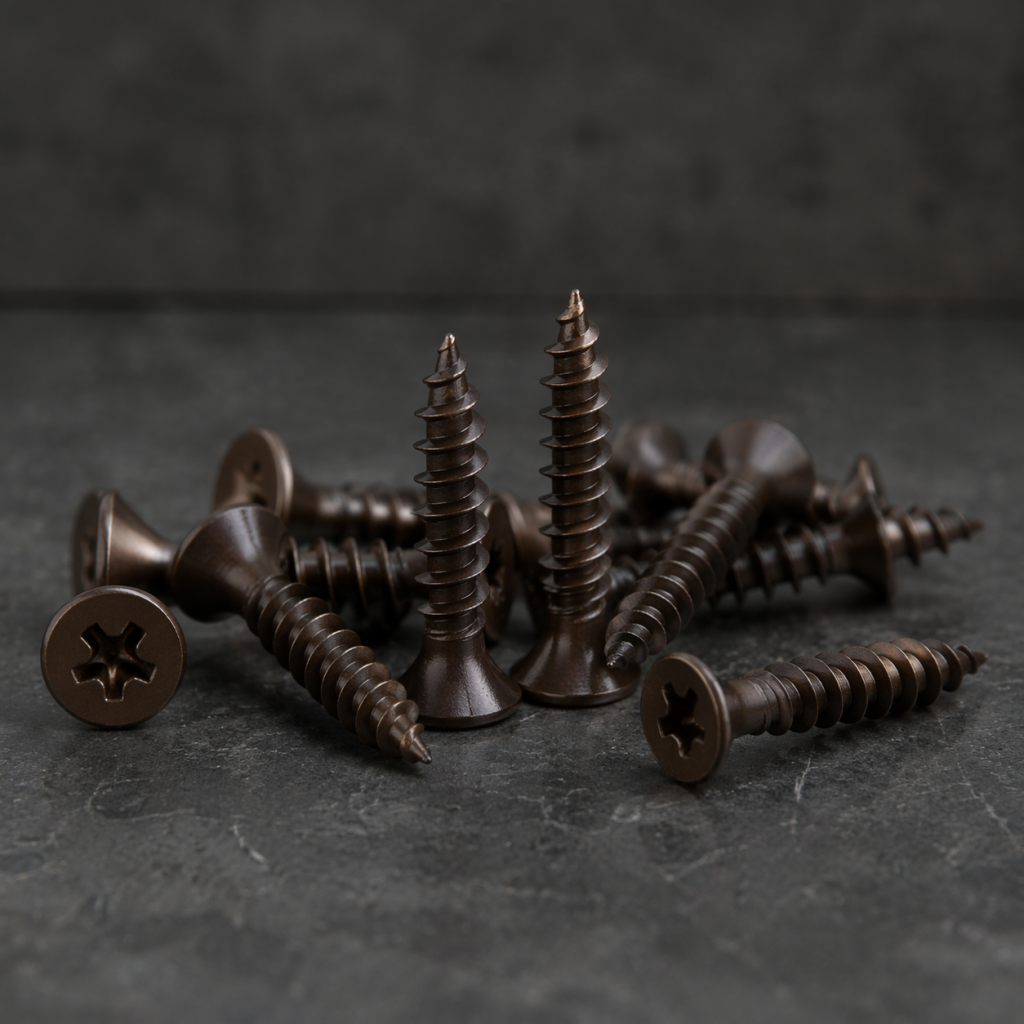
Bronze and brown finishes are used to achieve darker, more refined aesthetics, especially in architectural or industrial design contexts.
Key characteristics:
Dark brown / bronze tone
Matte or semi-matte surface
Visual integration with surrounding materials
Limited protective performance
Nickel Plating
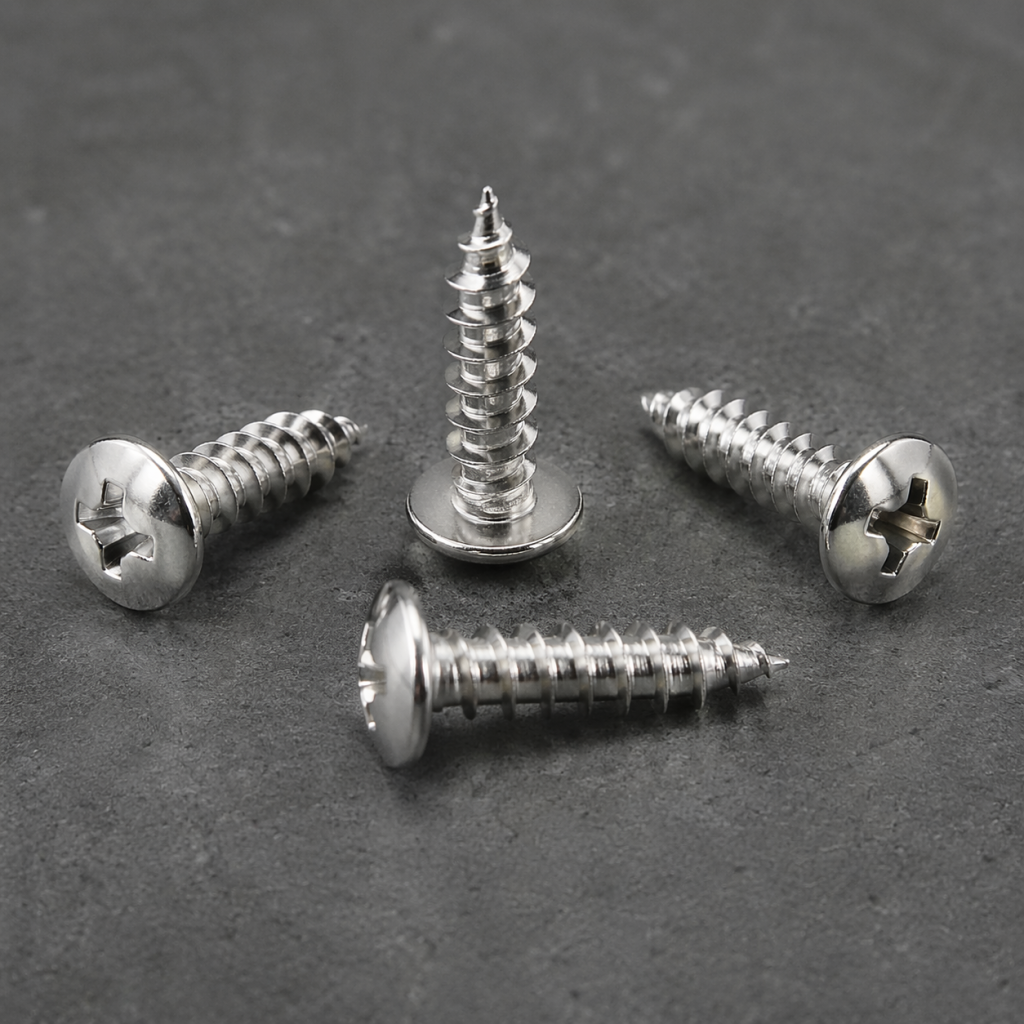
Nickel plating provides a bright metallic finish with improved corrosion resistance compared to purely aesthetic coatings.
Key characteristics:
Bright metallic appearance
Higher corrosion resistance than decorative coatings
Increased surface hardness
Aesthetic + functional use
| Finish | Appearance | Corrosion Resistance | Notes |
|---|---|---|---|
| Black Oxide | Black matte | Very low | No thickness, high precision |
| Brass Plating | Golden | Low | Decorative use |
| Bronze / Brown | Dark brown | Low | Architectural aesthetics |
| Nickel Plating | Bright metallic | Medium | Aesthetic + functional |
Aesthetic finishes are not designed for harsh environments or high corrosion resistance.
For demanding applications, protective coatings such as zinc flake or hot-dip galvanizing should be considered.
Nickel plating represents an intermediate solution, offering improved performance but not replacing dedicated protective systems.
Choosing the correct surface treatment is essential to ensure both appearance and performance.